

SANTA POLA PEDIATRIC PHYSIOTHERAPY
SANTA POLA PEDIATRIC PHYSIOTHERAPY CLINIC
At Clínica del Río-Hortega, we provide special care and attention to what we commonly refer to as Pediatric Physiotherapy. This specialty focuses on treating young children and young adolescents with motor or respiratory problems, ensuring their development is as normal as possible.
The main objective is to help each child achieve their full potential to function independently and to promote their active participation at home, school, and in the community.
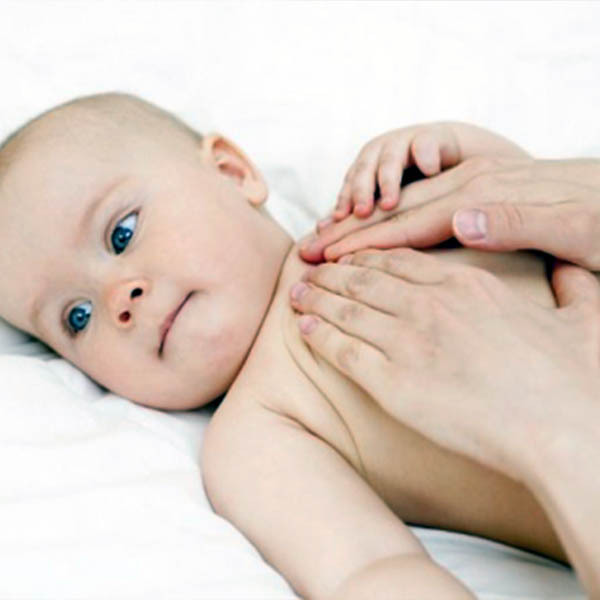
Pediatric Physiotherapy at Clínica del Río-Hortega
SOLICITA TU CITA AHORA
Solicite que le llamemos y nos pondremos en contacto lo antes posible para concertar una cita, o resolver cualquier duda acerca de nuestros servicios.
Pediatric Respiratory Physiotherapy:
Today, more and more children suffer from respiratory problems such as bronchiolitis, asthma, and/or allergies. With respiratory physiotherapy, we aim to prevent these conditions from becoming chronic by improving lung function and promoting the elimination of secretions to prevent respiratory infections. These conditions are so common due to a variety of causes, such as:
- Increasingly premature babies are born with immature lungs due to lack of gestation time.
- Early schooling.
- Increased allergens in the environment: pollution, tobacco, etc.
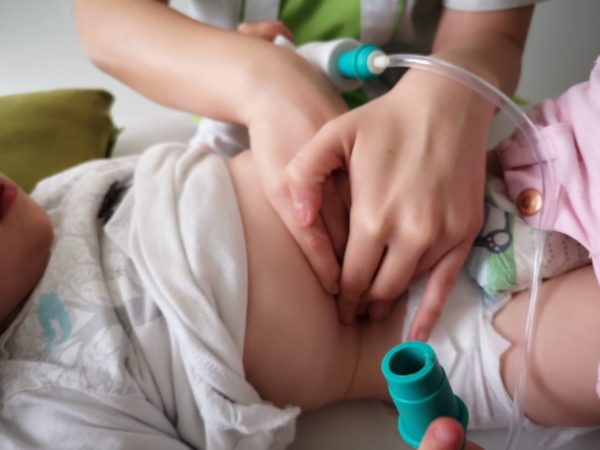
It is very important for babies to properly rinse their nasal passages several times a day to prevent upper respiratory infections and improve breathing. This will help babies absorb their nasal fluids properly while breastfeeding. Children with respiratory problems should receive special care to prevent worsening and achieve improvement, as prolonged or frequent nasal conditions can lead to chronic illness.
Some of this care should be done at home, such as:
- Installing a dehumidifier (especially in beach areas).
- Maintain a similar temperature throughout the house to avoid sudden changes.
- Do not overcover the baby.
- Perform nasal washes several times.
With respiratory physiotherapy, we help mobilize mucus to prevent infection and chronic respiratory disease. The techniques used with infants are often performed passively due to the patient’s lack of cooperation. Therefore, it will also be necessary to teach parents how to perform techniques with their infant at home and how to mobilize their lungs to help improve lung capacity.
Plagiocephaly:
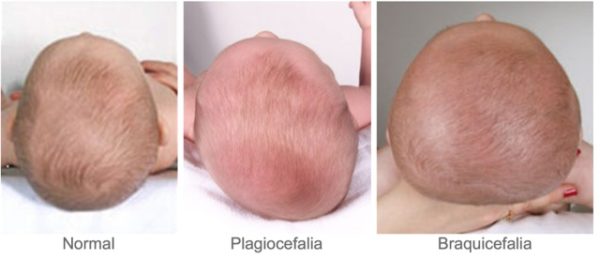
Plagiocephaly is a deformity of a baby’s head caused by pressure exerted on the skull.
The causes of this pressure can be:
- A long period in which the baby remains lodged in the pelvic canal before birth.
- The baby’s exit through the birth canal, even normally and without problems, also puts pressure on the skull and can cause deformities.
- In a complicated birth, due to the use of mechanical methods such as forceps to help the baby come out.
- When the baby’s position is not changed frequently and pressure is exerted on the same area for a long time. For example, when the baby is always placed on the same side during the day and night.
- Congenital torticollis.
Through pediatric physical therapy, when examining a baby with plagiocephaly, we can observe areas of flattening, bulging, and asymmetries. It’s also important to assess the condition of the sutures and fontanelles to ensure they are symmetrical.
We must also take into account the state of the muscles, since tension or shortening of the muscles causes a change in the position of the head, as occurs in the case of congenital torticollis.
When treating a baby with this condition, parents will be taught proper postural hygiene to consider in their daily lives, as well as stimulation-based exercises that encourage the baby to adopt a symmetrical position. The physiotherapist will align the cranial bones, treat abnormalities in the sutures and fontanelles, and address the affected muscles involved in the position of the baby’s head.